
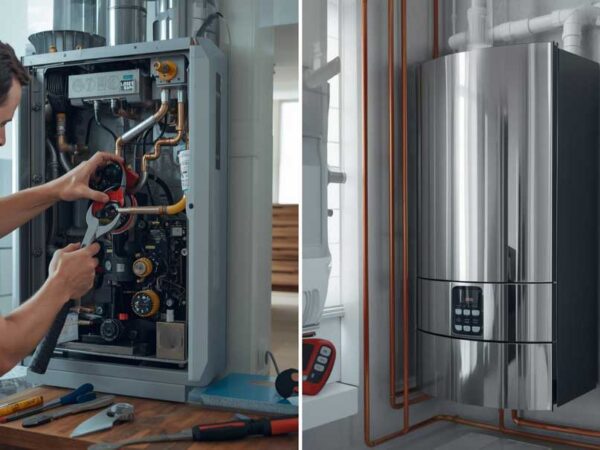
Making a decision between boiler repair and replacement hinges on long-term money worries. You need to weigh up what you pay now against what you save later, as repairs might give you a quick fix, but new boilers can cut your energy bills a lot over time.
It’s a careful balance of upfront spend against possible drops in running costs. Knowing the age and state of your boiler is the key first step in this process; it sets the base for a clear choice that fits both your goals for heat use and what you can afford.
Let’s examine how to assess your boiler’s current state next.
Assessing Boiler Condition and Age
When debating the merits of boiler repair versus replacement for cost savings, checking your boiler’s condition and age is key. If it’s been running well for over a decade, remember that wear and tear have likely cut its efficiency.
Consider this: older boilers can burn more fuel due to their lower ratings; JplumB says upgrading from G-rated to modern A-rated condensing units could cut energy bills a lot. Yet frequent faults are a real concern, and your constant calls for emergency boiler repair in Sutton soon wipe out any sense of saving money on quick fixes when growing costs loom large.
Rising heating costs despite steady use or odd sounds coming from your unit are clear red flags that you should think about a new installation, as reported by expert sources. Also, you should weigh the higher upfront cost of a new boiler against clear gains like higher home value, lower yearly heating bills and strong manufacturer warranties that can give you peace of mind.
In essence, sometimes you spend now to save later, a key point when you think about whether patching up an old friend is worth it compared to welcoming a sleeker newcomer into your home’s heart.
Weighing Repair Costs Against Replacement
Deciding between boiler repair and replacement hinges on several factors. For boilers under ten years old that you have had checked each year, most issues are usually single faults. In such cases, a simple fix can be far cheaper than a full unit swap.
Especially if your warranty still covers it, always check with the fitter before you go ahead, as this can save you money on repairs. As boilers age beyond 12 to 15 years, they run less well and break down more often.
Getting a new A-rated boiler can make sense for your budget due to lower running costs and a fresh warranty.
Factor in Energy Efficiency Savings
The allure of savings on energy bills is a strong reason many opt for replacing an old boiler. With new boilers boasting up to 30% more efficiency, the prospect of cutting heating costs by quite a bit adds weight to the argument for replacement over repair.
It’s not just about quick gains; newer models often come with warranties that shield you from surprise repair costs in the near future. Sure, you can’t dodge the fact that the first payment can be high, yet rebates and finance deals might ease this money strain a lot.
Think of it as a smart step for both safety and long-term thrift if your current unit has marked one too many birthdays. Our team at JplumB sees these gains as we suggest replacements, mainly aimed at boosting home energy use across Wiltshire.
Deciding between boiler repair and replacement comes down to long-term savings. Repairs may seem less costly upfront, but if you need them often, the cost soon adds up. On the flip side, a new energy-efficient model could cut your bills and help you avoid repeat repairs, so it can still be a good value over time.
At JplumB, we check your system and advise on the best choice for you, helping you save money while you use less energy. Trust us to guide you through this with care and skill; after all, our goal is to make sure your comfort comes at the best value for you.